
What Life is Like in Long Beach
Long Beach was founded in the early 1920s as a summer colony for Chicago's elite. A century later, it has evolved into something more nuanced — a blended community where longtime seasonal families, retired former weekenders, and a newer wave of year-round professionals from Chicago share a shoreline that still pulses dramatically with the seasons.
Of the town's roughly 1,100 housing units, just under half are primary residences. The median age hovers around 63 to 65 — a reflection of a pattern common across the Indiana Dunes shoreline: people who came for summers stayed for decades, and when retirement arrived, leaving simply wasn't on the table.
What holds the community together — and what distinguishes it from neighboring shoreline towns — is a set of deliberate choices about what Long Beach wants to be. Short-term rentals are restricted in ways that most lakefront communities don't attempt, preserving a residential character that transient tourism would otherwise erode. Traffic is limited. Parking is managed. The shoreline stays uncrowded.
The Stops: A Century of Coastal Geography
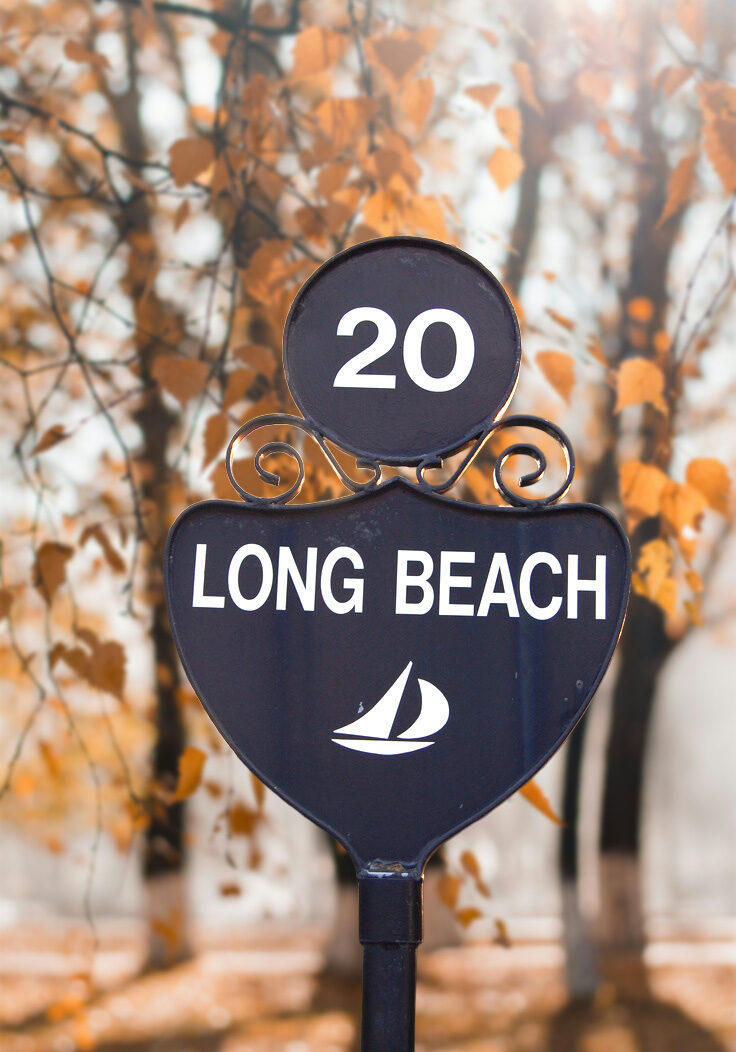
The numbered beach stops that define Long Beach's geography date to the early twentieth century, when they marked designated stops along the South Shore Line bus route and local trolley system that carried vacationers from Chicago and Michigan City to their summer cottages. The buses and trolleys are long gone. The nomenclature remained.
Today, each Stop refers to a public or private easement leading from Lake Shore Drive down to the water.
The numbers increase moving northeast toward the Michigan state line — Long Beach proper runs from Stop 13 through Stop 30, with Stop 24 serving as the town's informal center. Beyond Stop 30, the landscape shifts toward the more wooded, dune-heavy character of Michiana Shores.
For locals, the Stop system is coastal shorthand that has survived nearly a century. It is one of the quiet, specific things that makes Long Beach feel like a place with a real history rather than a planned community.
HOMES & ARCHITECTURE
Long Beach's architectural identity was shaped significantly by John Lloyd Wright, who moved to the town in 1923 and remained for over two decades. During that time he designed at least thirteen buildings in Long Beach, his practice was based here, and his work evolved in ways that left a visible mark on the town's landscape.
His early Long Beach work carried the hallmarks of his father's Prairie School influence — low-slung rooflines, strong horizontal lines, deep connection to the landscape. By the 1930s, following a trip to Europe, his designs began incorporating the vocabulary of the International Style. The result is a body of work that captures a significant architectural transition, on a street-by-street scale, in a small Indiana beach town.
Long Beach Town Hall at Stop 24, completed in 1931, is widely considered the first International Style building in Northwest Indiana. The Burnham House — known locally as the Pagoda House — is a five-level residence on Lake Shore Drive that Wright himself called his finest work. The original Long Beach school building, now the Community Center, is also his.
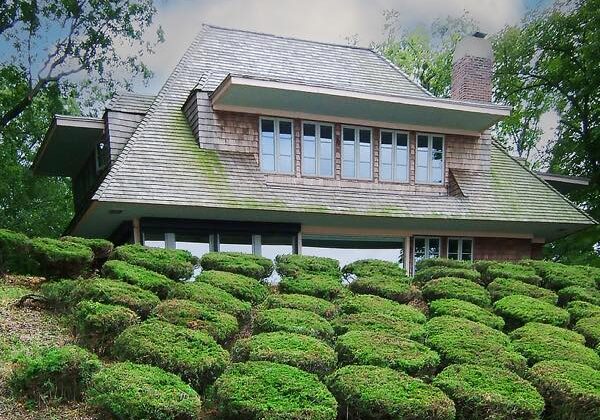
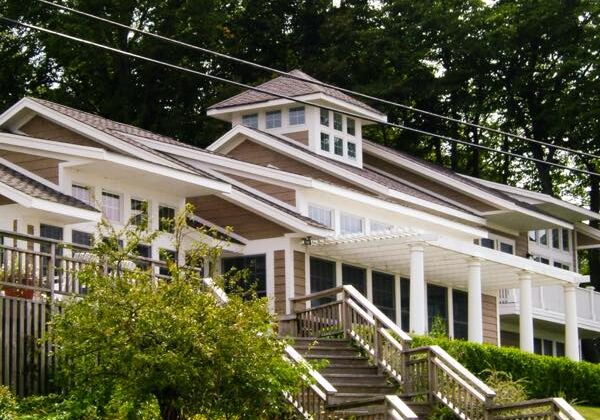
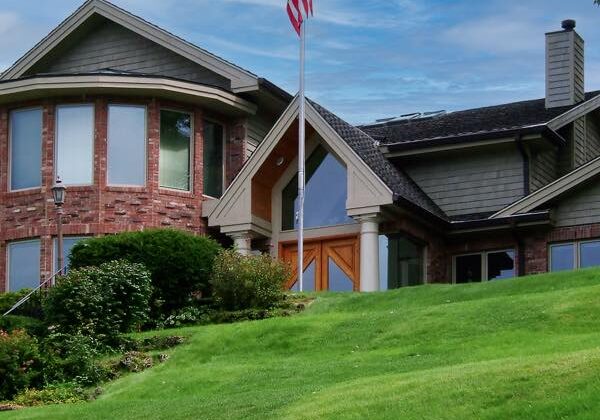
Beyond the Wright legacy, homes in Long Beach range from original cottages and bungalows to substantial lakefront residences and contemporary builds. Lot orientation, elevation, and proximity to specific Stops all influence value considerably. Prices begin around $400,000 for homes away from the water and can exceed $3 million for significant lakefront properties.

Dr. William Scholl
Notable History
Long Beach has drawn accomplished residents since its founding. Dr. William Scholl — the foot care magnate — summered here. Chief Justice John Roberts grew up in Long Beach. John Lloyd Wright not only practiced architecture here but raised his family here, leaving a built legacy that distinguishes the town architecturally from every other community along the Indiana Dunes shoreline.
Beach Access & Outdoor Living
Long Beach offers more than a mile of sandy Lake Michigan shoreline, with beach access managed through its historic Stop system. Resident parking keeps the beach notably uncrowded relative to public beaches in the region — a quality locals value and protect.
Beyond the shoreline, the town sits within easy reach of Indiana Dunes National Park trails, the Mount Baldy area, and the broader network of protected natural land that defines outdoor life along this stretch of the lake.
Search Homes for Sale in Long Beach
Market Characteristics & Considerations
The Long Beach market reflects the town's particular character. Inventory is limited — homes are held long-term, and when they do come to market, they require positioning that accounts for the community's specific dynamics. Buyer expectations here are shaped by history, architecture, and access in ways that differ from neighboring shoreline markets.
The restriction on short-term rentals is a meaningful factor for buyers to understand. It reflects the town's priorities and shapes both the ownership experience and the resale market. Long Beach attracts buyers who intend to use their homes — not operate them as investment properties.
Frequently Asked Questions
Common Questions about Living in Long Beach

BONNIE HAWKSWORTH
REALTOR®
@properties
219-309-7638
bonniehawksworth@atproperties.com
Explore Other Indiana Dunes Shoreline Communities




All information provided on this website is believed to be reliable but is not guaranteed and should be independently verified. Nothing on this site constitutes legal, financial, or tax advice—visitors should consult the appropriate professionals for guidance specific to their situation. Bonnie Hawksworth, the Dunelife Team, @properties | Christie's International Real Estate and their affiliates, and website owner make no representations or warranties, express or implied, regarding the accuracy, completeness, or suitability of any content for any purpose and shall not be liable for any loss arising from reliance on the information provided. This website and its owners comply with all Fair Housing Act and Equal Opportunity provisions. Equal Housing Opportunity. Bonnie Hawksworth, REALTOR® License # RB24000153