Dune Acres
Community Handbook
A practical guide to Dune Acres, Indiana: town government, beaches, parking, permits, security and services, plus a little of the history that shaped the town.


Index
Prologue
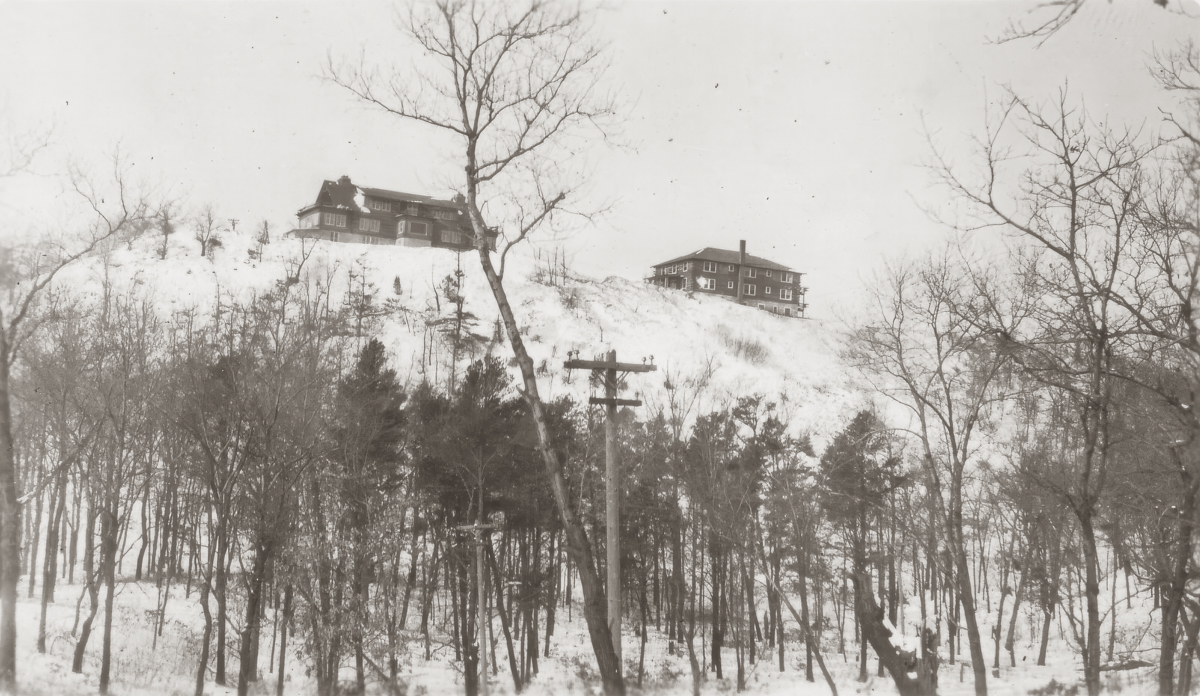
The history of Dune Acres starts not as a town but as a corporation. Dune Acres, Inc. was formed on April 23, 1923 by William A. Wirt, Harry Hall, A. P. Melton, C. R. Kuss and C. V. Ridgely, all of Gary, Indiana. The town itself was created by an election held five months later, in which nine voters (the corporation’s officers and directors and one spouse) voted 9–0 to incorporate. Their purpose was to develop a unique town in the Indiana Dunes on the shores of Lake Michigan. Most residents today would agree they succeeded.
In the early days, a log guest house stood beside the clubhouse. Visitors came from Chicago on the South Shore Line or by automobile on the newly completed Dunes Highway. They might stay at the guest house, dine on the American Plan and, if sufficiently taken with this lakeside community, lease a parcel of land on which to build a home.
The founders' aspirations for a town to rival those of Chicago's North Shore were upended by the Great Depression and World War II. The public buildings fell into disuse and the guest house was demolished in 1947. The clubhouse was spared the same fate thanks to the foresight and hard work of the volunteer social committee (more on that later!)
The close relationship between the town and corporation worked for many decades. In the 1990s, with most of the buildable lots sold, Dune Acres, Inc. voluntarily dissolved. Leaseholders were afforded the opportunity to buy out their land leases for $1, and virtually all of them did. The corporation deeded its roads, buildings, parks and lakefront land to the town.
Even a casual visitor can see that Dune Acres has an extraordinary setting. What is less obvious is how genuinely significant it is. Long before the town was founded, the area then known as Mineral Springs drew scientists and naturalists. The most notable was University of Chicago botanist Henry Chandler Cowles, whose studies of plant succession on the dunes helped found the science of ecology. Cowles Bog, named for him, is the best-known natural area in Dune Acres and has been credited as “the core nucleus for the creation of a national park in the Indiana Dunes.” The town’s founders almost certainly did not grasp the monumental ecological significance of the land they had acquired. An astounding 700 native plant species have been recorded within the town’s borders. When the National Park Service later surveyed the area, the report singled out the Dune Acres unit as its crown jewel: “Where else in the north temperate United States can such immense conservatism exist across so small an area? This 1400-acre tract represents a world-class natural area.”
From its earliest days, Dune Acres grew in harmony with its surroundings. Roads were laid out in winding lines that follow the natural topography, homes were carefully sited, and prime parcels were set aside as parkland. By the middle of the century, residents were acting deliberately to protect that setting. The defining moment came in 1953, when Mr. Elmore, a Chicago developer who owned the land along Mineral Springs Road, announced plans to subdivide it. The town had neither the taxing nor the bonding power to buy the land, so residents raised the money themselves. Their $42,000 fell short of the $50,000 asking price, but Elmore accepted it, and on May 23, 1953 the land was deeded to the town as parkland. Soon afterward, Mr. Edgren, a Valparaiso developer, offered his adjoining land for $9,500. With residents’ resources exhausted, the town sold about 18 acres of the Elmore land and used the proceeds to buy the Edgren property. Richard J. (Dick) Smith, who served on the fundraising committee and helped negotiate the purchase, later reflected on what the bucolic approach along Mineral Springs Road means to everyone who passes through it:
"The human experience imparted by wilderness is a unique one. A hike in either direction on the E-W trail that crosses Mineral Springs Road at the [security office] generously provides that experience. Perhaps that offers a better measure than money of what has been conserved through the Elmore-Edgren acquisitions."
In 1954 a children’s playground, two tennis courts and a ball field were added, again paid for by voluntary contributions, and an ice-skating rink came later. But in Dune Acres, “parks” has always meant, above all, the town’s priceless natural areas.
Dune Acres has grown slowly. In the mid-1980s there were 137 homes, about three-quarters of them occupied year-round, and more than 80 children. Today (2026) there are about 170 homes, half of them occupied year-round, with roughly 200 full-time and 400 part-time residents. Future growth is limited. In 1966 Congress established the Indiana Dunes National Lakeshore, redesignated Indiana Dunes National Park in 2019. During the 1960s and 1970s the federal government acquired much of the undeveloped private land in the area, including several hundred acres within the town’s corporate limits.
In many respects, Dune Acres is a time capsule. Pass the security office and the clock seems to slow to the middle of the last century. There are no streetlights and no shops. Neighbors know one another by name, and life is lived outdoors: on the trails and dunes, at the lake, or on the courts. The town still runs largely on volunteers. Residents serve as commissioners, plan the social calendar, keep the archives and care for the natural areas, on the understanding that a town this small works only when everyone pitches in. Here, public service is less a calling for a few than an expectation of all.
For New Residents (and Old)
Whether you’re new to Dune Acres or have been here for years, the following section is a quick guide to getting settled:
Email Signup
Town news and announcements are shared via email. Sign up on the Dune Acres website to stay informed.
Utilities
Residents contract for all utilities directly. NIPSCO provides both electric and gas service on one bill, which arrives monthly. Indiana American Water bills every two months for water service. Be sure to confirm you are paying for water only, and not also for sanitary sewer, which Indiana American Water does not provide to Dune Acres. Total Disposal (219-944-1800) is the preferred vendor for weekly garbage and biweekly recycling collection; it serves Dune Acres on Tuesdays and offers residents a preferred rate of $25 per month (garbage only). Republic Services is another option and collects on Mondays. When signing up for service, be sure to say you’re in Dune Acres. Comcast (Xfinity) provides broadband service to the town. Frontier Communications has historically provided landline service and may have broadband options, too.
Switching utilities for an existing home is relatively easy. If you are building a new home, however, contact the utility companies at least six months in advance to make sure service exists or can be extended to your property.
The Dune Acres Sticker
Vehicles parked in town lots or along town roads must display a Dune Acres Resident Parking Permit (the “sticker”) or a Guest Parking Pass. You can apply online at duneacres.org/parking.html or by contacting the clerk-treasurer’s office.
You need a permit or pass only to park in a town lot or along the roadside. You don’t need one to enter Dune Acres, drive on town roads, or park on private property. Even so, we encourage every household to get stickers, because they help security staff recognize residents’ vehicles at a glance.
Resident Parking Permits are issued annually. Each household may have up to two permits (one per vehicle) at no charge; additional permits are $40 each per year. Each application requires vehicle and residency documentation.
Guest Parking Passes are $80 per year. They are intended for non-resident family members and others with a close connection to the household and should not be widely distributed.
Security
The Dune Acres security office is staffed 24/7, with rare exceptions. The security chief (Roger Goode) and his staff monitor commercial traffic at the town’s entrance, patrol its roads and parks, and enforce the town’s ordinances. They answer to the Town Council and serve the town as a whole and help to keep the peace.
Security staff are not concierges or private guards for individual households or residents. Their duty runs to the community. Sometimes that means asking a guest to move a car, ticketing a golf cart that is operated contrary to town ordinances, or reminding a neighbor that their contractor can’t work on a holiday. Those conversations can be uncomfortable, but they are part of the security job, and that job serves all of us.
Residents can help in simple ways:
- Know and follow the town’s ordinances, and make sure your guests and contractors do too.
- Let the security office know when you expect visitors, large-truck deliveries, or work crews.
- Report anything that seems out of place. Dune Acres has long been a quiet, safe community, but that doesn’t mean it is immune.
- Treat officers with the same courtesy you would expect in return, especially when the news is unwelcome.
In an emergency, call 911 first. This is vitally important. The 911 operator will dispatch the responders you need quickly. Then, if you can, call the security office so staff can meet responders at the entrance and guide them to your door.
Security staff help keep Dune Acres the place we all chose to live. The best thing any of us can do in return is make their job easier.
Clubhouse Rentals
The Dune Acres clubhouse is listed on the National Register of Historic Places. It was the first building constructed in town (1923-1926) and serves as the social center of the community. The clubhouse grounds are generally open to residents and the view from the patio or lawn is extraordinary. The building itself is open for informal resident use on select days during the warm-weather season. Residents may also rent the clubhouse for private events. Interested parties can apply online at duneacres.org/clubhouserental.html.
Building and Planning Permits
Nearly every construction project in Dune Acres needs town approval before work begins. Depending on the project, approval means an Improvement Location Permit (ILP) from the Plan Commission, a building permit, or both.
Improvement Location Permit. This is the zoning approval, and it comes first. The Plan Commission reviews the project against the Zoning Ordinance (Chapter 46): setbacks, height, floor area, driveway location and grade, drainage, and architectural and landscaping plans. Plan Commission approval culminates in the issuance of an Improvement Location Permit (ILP). An ILP is required for any new structure, additions and exterior changes, and for excavation, grading or tree removal connected to a project. Depending on the scope and scale of your project, the Plan Commission review process can be extensive. Involve the Plan Commission as early in your design process as possible. A zoning problem caught at the sketch stage costs far less to remedy than one caught after the drawings are done.
Building Permit. The Building Commissioner reviews construction plans for compliance with the building code (Chapter 10), inspects the work as it progresses, and makes a final inspection when it’s done. Any project that requires Plan Commission approval will also require a building permit.
Small projects. A building permit is generally not required for work costing less than $3,000 in materials and labor. Some rules apply regardless of cost, however:
- Removing vegetation requires approval as part of a permitted project.
- Trees 4.5 inches or more in diameter must be documented before removal.
- Excavation that disturbs more than 3 cubic yards of sand or soil requires a permit.
When in doubt, ask before you start. Send an email to the office of the Clerk-Treasurer and your inquiry will be directed to the appropriate individual or department.
Note: Septic systems and other onsite sewage systems are regulated by the Indiana Department of Health. Such installations require an additional permit issued by the Porter County Health Department.
Contractors. Every contractor and subcontractor working in Dune Acres must register with the town each year before starting work. This requirement includes landscape and snow removal contractors, in addition to all construction trades. Architects, designers, and material supply vendors are exempt. Certain trades must also hold a state license.
The registration form is at duneacres.org/officialforms.html. Property owners are responsible for making sure their contractors are registered.
Did You Know?
There are no streetlights in Dune Acres. The town turned them off in 1933, in the depths of the Depression, when it could no longer pay the electric bill, and they never came back. The dark roads residents treasure today were initially a product of circumstance, not planning. The town adopted a “Dark Sky” ordinance in 2020 and all residents are urged to comply.
The windshield sticker dates to about 1960, two years after the town adopted its first traffic rules. Streets were named that same year, when the Post Office mandated individual addresses: main roads were named for directions (East Road, West Road), drives for landforms (Shore, Crest, Ridge), and lanes for plants (Fern, Lupine, Linden).
Many notable figures have called Dune Acres home. Senator Paul Douglas of Illinois, who led the long fight in Congress to create the Indiana Dunes National Lakeshore, once owned a house at 12 Ridge Drive. The senator's wife, Emily Taft Douglas, was a notable politician in her own right and the daughter of the famed sculptor Lorado Taft. Albert Crewe, formally of 8 Summit, invented the electron scanning microscope and was the first person to photograph an atom. Jack Knight of 26 Circle Drive was a pioneering aviator. He made the first overnight transcontinental mail delivery and was the first pilot to log 1 million miles. The comedian Jim Gaffigan was raised in Dune Acres. Jerry Garcia, although never a resident, was once sighted on the Dune Acres beach.
Town Government
The Town Council has three members, all elected at large by the voters of the whole town. The clerk-treasurer is also elected by the town’s voters. Each serves a four-year term. Town elections are held in November of odd-numbered years, when no county, state or federal offices are on the ballot; the next town election is in 2027. Those elected take office on January 1 of the following year. Council members have historically served without compensation. When only one candidate files for each office, no election is held, saving the town the expense.
Candidates may run as independents or as party nominees. For many years, town candidates ran on the slate of a local “Dune Acres Party”; in recent years, candidates have run as independents. An independent candidate is placed on the ballot by filing a petition of nomination signed by registered voters of the town, together with a signed consent to the nomination (state forms CAN-44 and CAN-45). These are due by noon on July 15 of the election year. Current forms, signature requirements and deadlines are published each election year by the Indiana Election Division.
The Town Council elects one of its members as president and presiding officer. The president is the town’s executive, while the three members together are the town’s legislative body.
When a vacancy occurs on the council, the remaining council members appoint a person to fill the vacancy. Regular public meetings are held on the third Tuesday of each month, at the clubhouse if the roads are passable, and at town hall if they are not. Special meetings may be called when needed. Two council members constitute a quorum. The clerk-treasurer is the secretary of the council and votes only to break a tie.
Each year the clerk-treasurer prepares the annual budget, which is considered and adopted by the Town Council. The state limits how much the town may raise from property taxes each year; this limit is called the maximum levy. The budget must fit within that limit plus the town’s other revenue. The Dune Acres budget provides for:
- Road Maintenance, including paving and snow removal
- Security
- Park and recreational facilities
- Environmental stewardship
- Acquisition and maintenance of public property
- Property and liability insurance
- Planning and regulation of land use and building
The Town Council approves all “claims” at its regular meeting before the clerk-treasurer remits payment. The town council president supervises the work of commissioners, who report at the monthly council meetings.
The town council president is empowered to appoint commissioners to carry out the provisions of town ordinances and establish standing or temporary committees. These are volunteer positions.
- Security Commissioner
- Roads Commissioner
- Parks Commissioner
- Beach Commissioner
- Building Commissioner
- Fire Commissioner
- Clubhouse Coordinator
- Environmental Commissioner
- Plan Commission Members
- Board of Zoning Appeals
- Historic Committee
- Town Attorney
Town Clerk-Treasurer
The clerk-treasurer is elected by the voters of the town and holds an independent office: the clerk-treasurer is the town’s fiscal officer and secretary of the Town Council, not an employee of the council. The clerk-treasurer receives and disburses town funds, keeps the town’s financial books, prepares the budget estimates the council uses to adopt the budget, files budgets and financial reports with the state, keeps the minutes of council meetings and the town’s official records, and answers official correspondence. The clerk-treasurer also issues the identifying decals required for residents’ automobiles, licenses required for dogs, and issues building permits and contractor registrations.
Security Chief and Staff
The Security Chief is appointed by the Town Council and directs the town’s security staff. From the security office on Mineral Springs Road, security staff monitor the town’s only access road 24 hours a day, patrol town streets and parks, and monitor activities on the beach.
Roads Commissioner
The Roads Commissioner plans and supervises paving maintenance, drainage and erosion repair, as well as snow removal and special road improvements. These activities are carried out by private contractors. Contracts for major repairs and resurfacing are awarded upon review of competitive bids. The Roads Commissioner also cooperates with the clerk-treasurer to apply for state and federal grants to supplement town roads funding.
Parks Commissioner
The Parks Commissioner oversees the town’s recreational facilities, including the playground, tennis courts, and ice rink, and also works with the Beach Commissioner to oversee the town beach.
Beach Commissioner
The Beach Commissioner is responsible for ensuring the safe and enjoyable use of the town beaches. The Beach Commissioner can provide guidance on watercraft use and storage and is often involved in organizing social gatherings, including summer concerts and other parties.
Building Commissioner
The Building Commissioner’s duty is to check building plans for compliance with the building code. If they meet code requirements, the Building Commissioner recommends to the Town Council that the clerk-treasurer issue a “Building Permit,” and makes periodic inspections of buildings under construction. Upon completion of construction, the Building Commissioner makes a final inspection, determines any extra fees to be paid, and recommends that a “Use and Occupancy Permit” be issued by the Secretary of the Plan Commission.
Clubhouse Coordinator
The Coordinator is responsible for the maintenance, improvements, safety and security of the log Clubhouse, built in the 1920s and part of the town park complex. For rentals, see Clubhouse Rentals.
Environmental Commissioner
The Environmental Commissioner oversees the town’s natural areas, including parkland formerly under the Parks Commissioner, and monitors the use of the area’s water, beach and woodland resources. The Environmental Commissioner reports to the Town Council and advises it on environmental protection.
Plan Commission
The Plan Commission administers the Subdivision Control Ordinance and the Zoning Ordinance, and serves in an advisory capacity to the Town Council.
The Zoning Ordinance classifies, regulates and restricts the location, height, size and use of buildings and structures and the use of the land of the Town. It covers such matters as minimum lot size, setbacks, parking provisions, structure height, driveway location and grade, location of septic tanks and property use. Prospective builders must obtain a Zoning Permit from the Plan Commission as the first step in planning a structure, excavation, grading or modification of existing structures. Failure to do so may place the property owner in violation of the ordinance or require costly revisions of plans.
A Zoning Permit is not a Building Permit. The latter must be separately obtained when the construction plans have been fully developed. (See section on Building Commissioner.)
Appeals may be made from any adverse decision of the Plan Commission to the Board of Zoning Appeals. (See following section.)
The Plan Commission consists of seven members: the three members of the Town Council and four citizen members appointed by the Town Council. The Secretary of the Plan Commission is appointed by the President of the Commission.
Copies of the Dune Acres planning ordinances may be obtained from the Secretary of the Plan Commission and on the town website.
Board of Zoning Appeals
This Board has the duty to “Hear and determine appeals from and to review any order, requirement, decision, or determination of the Plan Commission.” In certain circumstances, the board is empowered to grant variances, particularly when a literal enforcement of the ordinance would result in unnecessary hardship. Decisions and findings of the Board are subject to judicial review as provided by law.
The Board of Zoning Appeals has five members, of whom two are appointed by the Town Council from the Plan Commission and three are appointed as citizen members who hold no other public office.
Historic Committee
The town’s historic committee, established in 1988 as the Dune Acres Historical Commission, curates an extensive archive of documents, photographs, recorded interviews and other materials from Dune Acres’ long history. For the town’s 75th anniversary in 1998 it published The History of Dune Acres, the most complete account of the town’s first seventy-five years.
Beaches
Dune Acres residents reach Lake Michigan through several town beach access points; several have parking and a path or stairway to the shore. They are listed here from east to west. Residents and guests are expected to follow posted rules and town ordinances when using the beaches.
- East Beach provides parking for property-stickered vehicles, rustic bathroom facilities, and an accessible viewing deck with designated parking. During the warm-weather months, a sand mat is placed to provide improved access to the shoreline. A stairway connects Circle Drive to the East Road blowout and a boardwalk path terminates at the East Beach parking lot.
- Ridge Drive Beach provides places to park and a boardwalk path to the beach, with several benches along the way. A stairway leads from the end of Crest Drive to this access point.
- Shore Drive Beach provides limited parking and a grass walking path to a stairway to the beach.
- Oak Drive Beach is reached by a boardwalk path and staircase to the west of 22 Oak. Parking at the head of the boardwalk is currently limited to attended vehicles only.
- Hill Drive Beach is reached by a staircase to the east of 19 Hill. Limited parking is available at the head of the stairs. Seasonal kayak storage is available for residents from April through November.
- West Road Beach is reached by a walking path and stairs to the west of 58 West Road. Parking is available on the south side of West Road where it intersects with Cypress Lane. Note: this access crosses private property, with a walking easement dedicated only to Dune Acres residents and their invited guests.
Environment
Landowners are encouraged to leave dead wood and leaves in the woods surrounding their homes. Standing dead trees furnish habitat for birds and small animals. More importantly, leaves and dead wood are decomposed by bacteria and fungi and essential elements, such as nitrogen, are transformed into forms usable by plants. If the leaves and dead wood are removed, the energy cycle is broken and soil nutrients will soon be leached, unavailable for new plant growth in our sandy soils. In addition, the leaf litter and decomposing dead wood reduces erosion and increases the water holding ability of the soil.
Some clearing is needed around homes, driveways and roads, and for that material the town contracts for seasonal brush collection. Brush collection is a convenience for cleanup near homes and roads. It is not a reason to clear fallen limbs and leaves from the woods, where they do the most good.
Invasive plants threaten the natural areas of Dune Acres. Oriental bittersweet, bush honeysuckles, Japanese honeysuckle, tree of heaven, burning bush, Japanese barberry and garlic mustard are all common here, and many of these may no longer be sold in Indiana. Remove invasive plants as soon as you find them: a few seedlings are an afternoon’s work, while an established thicket can take years. Cut or pull fruiting shrubs such as bittersweet and honeysuckle before their berries ripen, because birds eat the fruit and carry the seeds into the woods. Don’t plant these species, and don’t dump yard waste or garden plants in the woods, where they can take root.
Fire Protection
Fire protection service to the Town of Dune Acres is provided through an agreement with the Town of Porter, whose volunteer fire department serves Dune Acres. Until the mid-1980s, Dune Acres kept its own volunteer fire department; in earlier decades every household was expected to help fight the brush fires that periodically swept the area, most destructively in March 1949.
Ambulance and emergency medical service is provided by Northwest Health EMS under contract with Porter County and is dispatched through the county’s 911 center.
Outdoor fires are prohibited by town ordinance except in approved containers. Beach fires must be in a container, kept well away from the marram grass and other dune vegetation, and attended at all times.
Porter County’s 911 center uses Smart911. Residents can create a free safety profile at smart911.com listing household members, medical needs, pets and emergency contacts; the profile appears on the dispatcher’s screen when you call 911 from Porter County. The same sign-up enrolls you in Alert Porter County, the county’s system for severe weather and other emergency alerts.
Residents are urged to install smoke detectors and keep fire extinguishers in working order.
Paying the Town's Bills
Taxes
The property tax on land and improvements in Dune Acres is paid by the owner semi-annually to the Porter County Treasurer. About a third of a typical Dune Acres property tax bill goes to the town. Property taxes are the majority of town revenue.
In 2025 the Indiana General Assembly passed Senate Enrolled Act 1, which changes homestead deductions and credits over several years and restructures local income taxes. The income tax changes, originally set for 2028, have since been delayed to 2029. As of this writing, the long-term effect on the town and its residents is unclear.
In addition to property taxes, the town receives state distributions such as gasoline and vehicle-related road funds, local income tax, and other sources. Property taxes are distributed to the town twice a year; most state distributions arrive monthly.
Indiana laws governing preparation of budgets of local governmental units are designed to give maximum protection to property tax payers against excessive and burdensome local governmental costs. Town budgets and financial reports are posted on Indiana Gateway for Government Units (gateway.ifionline.org).
Indiana’s constitution caps each property tax bill at a percentage of the property’s assessed value: 1% for a homestead, 2% for other residential property, including second homes, and 3% for other property. When a bill would exceed its cap, the owner receives a credit, and the local units that levy the tax, including the town, absorb the difference. Because about half of Dune Acres homes are not primary residences, many properties here fall under the 2% cap. Separately, the state limits how much each unit’s total property tax levy may grow from year to year, using a growth factor set by the Department of Local Government Finance.
Town Budget
Each year the clerk-treasurer prepares an estimated budget of town expenditures for the following year. The process begins in the summer. The Town Council must adopt the budget by November 1, after publishing notice and holding a public hearing; the Department of Local Government Finance then reviews it and certifies the town’s budget, levy and tax rate, usually by the end of the year. The adopted budget appropriates money to specific purposes within each fund, and the town may spend only what has been appropriated. Spending beyond that requires an additional appropriation, which also requires public notice and a hearing. Appropriations are made in funds such as the General Fund, Motor Vehicle Highway Fund, Local Road and Street Fund and Park Fund.
The town’s financial records are subject to audit at any time by the State Board of Accounts, which audits the town periodically, generally every few years.
Total expenditures of the Town of Dune Acres in 2025 were about $500,000, with roughly two-thirds for employee salaries. Other major expenses include capital improvements and maintenance of the town’s roads.
For taxes payable in 2026, the net assessed value of property in Dune Acres was $[ ]. Indiana assesses property at its market value-in-use. The town’s tax rate was $[ ] per $100 of assessed value, and the total rate for all taxing units combined was $[ ].
Community Partners
The organizations below are independent of the Town of Dune Acres. The Town Council does not govern them or direct their work, though each contributes to community life.
Dune Acres Civic Improvement Foundation, Inc.
The Dune Acres Civic Improvement Foundation was conceived and organized for the purpose of affording a means by which Dune Acres residents and friends could aid the community in its efforts to maintain high quality institutions, facilities, and services, and provide programs and projects which could contribute to and enhance the viable and progressive character and wholesome environment of the community.
The Foundation was formed as a body distinct from the Town of Dune Acres to which tax-deductible gifts, bequests, memorials, etc. may be given. It was incorporated in the State of Indiana on November 26, 1984 and received final approval of 501(c)(3) tax exempt status from the Internal Revenue Service on August 28, 1986. Its early projects included protecting the shoreline and Beach Drive during record-high lake levels and the restoration of the Clubhouse, completed in 1991.
The Town Council may ask the Foundation for a grant when a proposed project exceeds the town’s budget or would benefit from broad community participation and support. The Foundation’s board decides independently whether to fund a request.
Dune Acres Social Committee
The Dune Acres Social Committee was organized in the early 1950s and has been an important part of community life since that time. The Social Committee initially “rescued” the clubhouse from disrepair and brought wider attention to the responsibility of preserving the historic structure.
The Committee sets a calendar of social events each year. Events that use the Clubhouse or other town property follow the Town Council’s policies on use of public property, fees, parking and cleanup.
Other Public Services
Schools
Dune Acres is served by Duneland School Corporation, which includes five elementary schools (kindergarten through grade 4), two intermediate schools (grades 5–6), two middle schools (grades 7–8) and Chesterton High School.
Nearby private and charter schools include Discovery Charter School, St. Patrick’s, Chesterton Montessori, etc. Several pre-schools operate in northern Porter County, with the Field Station Preschool, located on Howes Road, near the Bailly Homestead, the closest.
Taxes for schools are levied by a school board whose members are elected by the whole district at the November general election. The school tax is part of the property tax bill.
Buses transport Dune Acres students to Yost Elementary School in Porter (kindergarten through grade 4), Westchester Intermediate School (grades 5–6) and Westchester Middle School (grades 7–8) in Chesterton, and Chesterton High School (grades 9–12). The school system provides special education for students unable to attend regular classes.
Libraries
Westchester Public Library serves residents at the Thomas Library, 200 West Indiana Avenue in Chesterton, and the Hageman Library, 100 Francis Street in Porter.
The Westchester Public Library Board levies a library tax, which is part of the property tax bill.
Voting
Where to Vote
Dune Acres is a precinct of Westchester Township in Porter County. Porter County uses vote centers, so on Election Day registered voters may vote at any vote center in the county. Locations and hours are posted at IndianaVoters.in.gov and on the Porter County elections website.
General Elections and Primaries
To vote in Indiana you must be a U.S. citizen, at least 18 years old by the general election, and have lived in your precinct for at least 30 days before the election. Registration closes 29 days before each election, and there is no Election Day registration. Voters must show a photo ID. You can register, check your registration and see your ballot at IndianaVoters.in.gov.
Early and Absentee Voting
Any registered voter may vote early in person, beginning 28 days before an election and ending at noon on the day before Election Day. Porter County’s early voting sites are listed at IndianaVoters.in.gov.
Voting by mail requires a qualifying reason under Indiana law, such as expecting to be away from the county on Election Day. Applications are available from the Porter County elections office or at IndianaVoters.in.gov and must be received no later than 12 days before the election.
Useful Contact Information
Libraries
Westchester Public Library – Thomas Branch
Westchester Public Library – Hageman Branch
Westchester History Museum
Gas and Electric
Northern Indiana Public Service Company (NIPSCO)
Water
Indiana American Water
Refuse
Total Disposal
Republic Services


All information provided on this website is believed to be reliable but is not guaranteed and should be independently verified. Nothing on this site constitutes legal, financial, or tax advice—visitors should consult the appropriate professionals for guidance specific to their situation. Bonnie Hawksworth, the Dunelife Team, @properties | Christie's International Real Estate and their affiliates, and website owner make no representations or warranties, express or implied, regarding the accuracy, completeness, or suitability of any content for any purpose and shall not be liable for any loss arising from reliance on the information provided. This website and its owners comply with all Fair Housing Act and Equal Opportunity provisions. Equal Housing Opportunity. Bonnie Hawksworth, REALTOR® License # RB24000153