
There is an unspoken trade-off that has crept into modern suburban life: to get a home near a vibrant downtown, you usually have to accept the subdivision that comes with it.
Over the past two decades, Valparaiso has blossomed into one of the Midwest’s most celebrated small cities. Its brick-paved central square, award-winning dining, summer concerts, and top-tier schools have brought an undeniable energy to town. But growth carries an inevitable consequence: lots shrink, homes crowd closer together, and property lines are governed by binders full of neighborhood covenants.
To find genuine acreage—land where the horizon belongs entirely to you—typically means driving twenty or thirty minutes south. Finding more than two wooded acres with running water, rolling topography, and complete independence just minutes from the courthouse square is exceedingly rare.
Where Land Does What Subdivisions Can’t
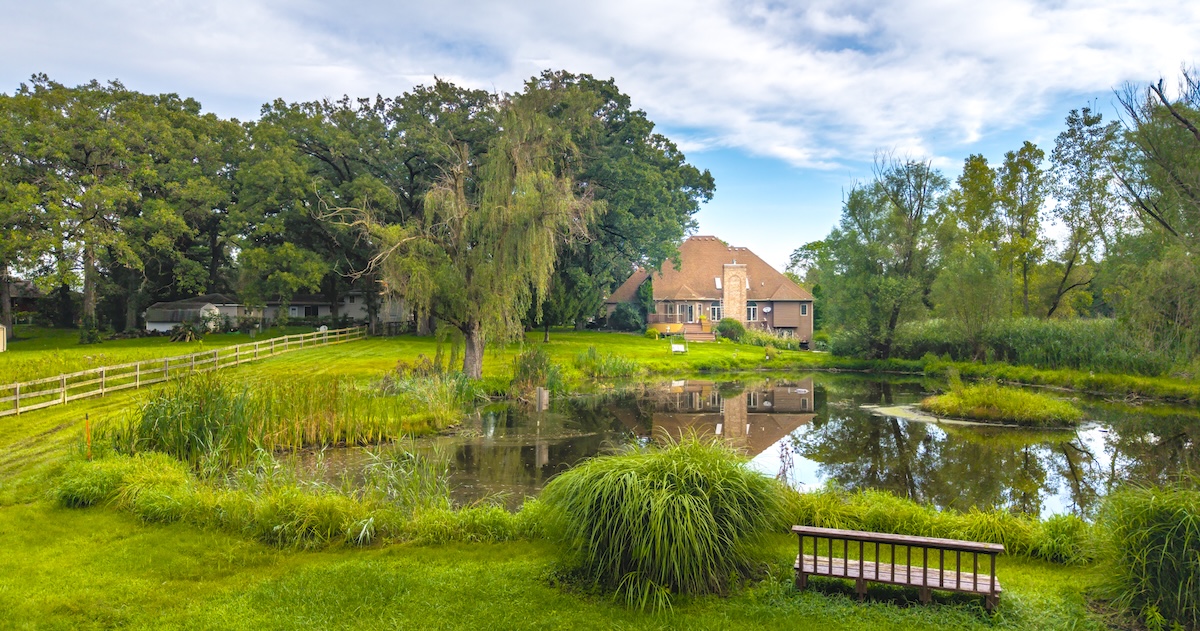
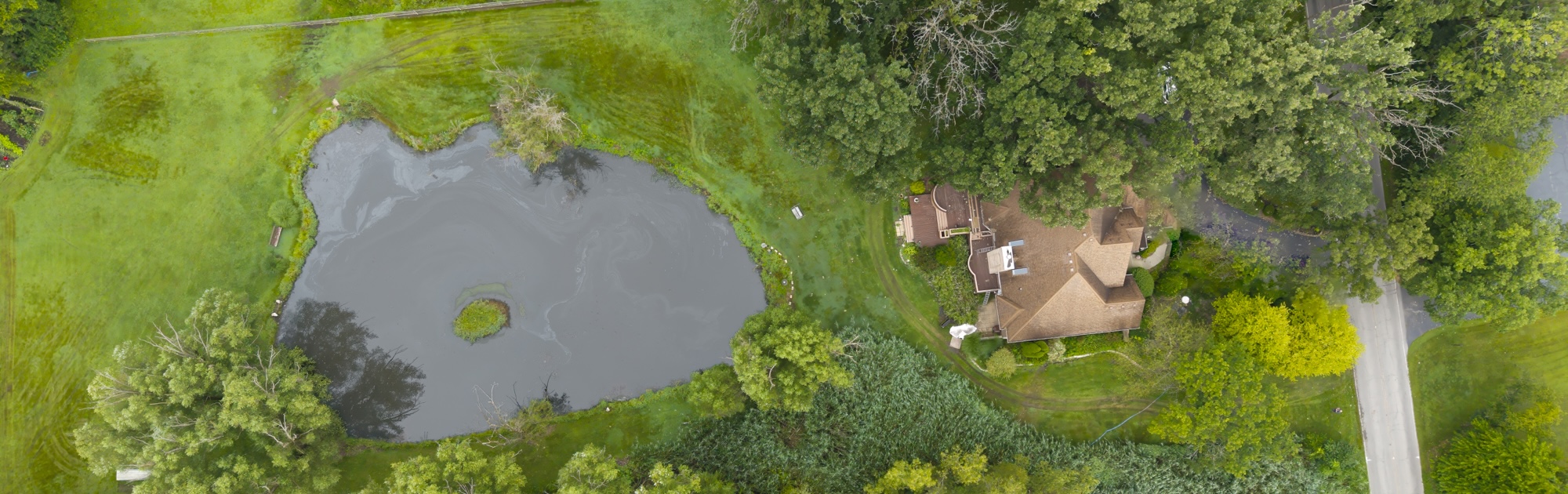
Set along the quiet, wooded contours of the Valparaiso Moraine, this 2.28-acre sanctuary at 292 West 500 North offers a kind of natural architecture that no developer can manufacture.
The approach is sheltered beneath a cathedral canopy of mature, legacy oaks. Behind the home, the terrain rolls gently downward past sweeping lawns toward a private half-acre pond—an ever-changing sanctuary for blue herons, nesting waterfowl, and quiet morning mist. Just past the water’s edge, the tree line meets the cool, clear currents of Pepper Creek as it cuts through the back corner of the property.
Here, there are no deed restrictions dictating your landscape, no homeowner association architectural committees, and no neighbors looking across a twelve-foot fence. It is a private ecosystem where mornings are measured in birdsong over steam rising off the water, and evenings end around a fire pit under an unobstructed canopy of stars.
Yet when you want dinner on the square or need to drop the kids at school, downtown Valparaiso is barely a five-minute drive down the road.
Structural Heft: The Mid-’90s Custom Standard
The residence itself was built in the mid-1990s as a true custom build for its original owners, and it carries the physical integrity that defined that era of American craftsmanship. Heavy brick masonry, genuine cedar accents, and a complex, multi-gabled roofline ground the house deeply into its natural setting.
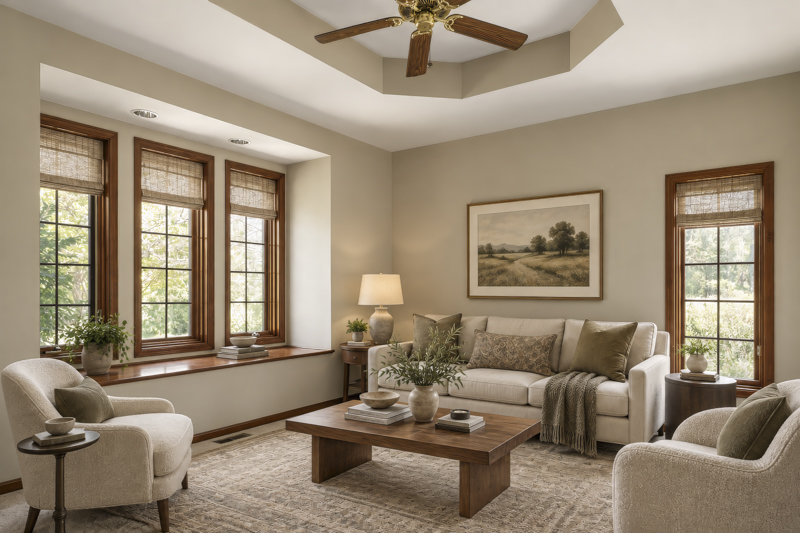
Inside, the home delivers the generous volume modern builds so often skimp on. Spanning more than 3,250 finished square feet above grade—with an additional 2,100-plus square feet of clean, daylight basement waiting in reserve—the proportions are built for real life:
- A Two-Story Great Room anchored by a floor-to-ceiling brick masonry fireplace that draws daylight deep into the heart of the home.
- A Main-Floor Primary Retreat positioned for total separation, featuring vaulted lines, private views, and an ensuite bath with a deep soaking tub.
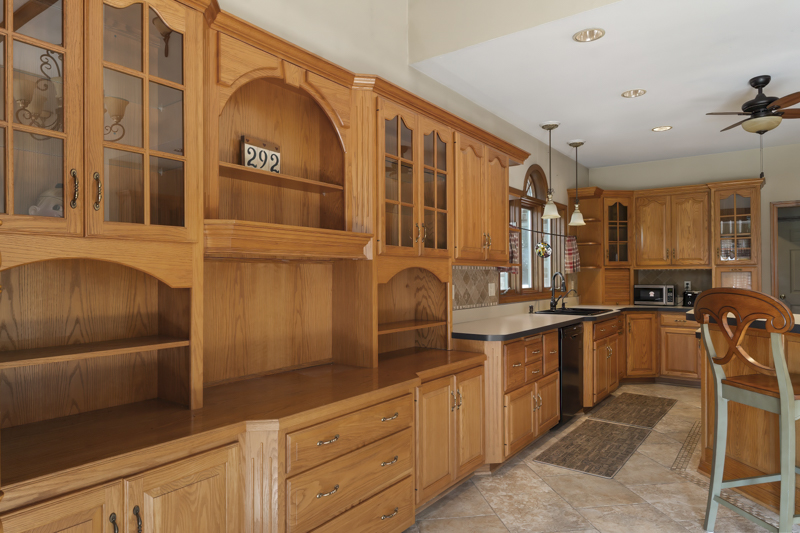
- Thoughtful Flow connecting formal dining, an expansive eat-in kitchen with an island, and a sunny breakfast nook opening toward the rear deck.
- Second-Level Flexibility, where generous bedrooms flank an oversized 22-foot flex studio—equally suited as a creative workspace, home library, or dedicated upstairs den.
Because the home was lovingly inhabited by the same owners for thirty years, it has not undergone the cycle of trendy cosmetic flips. Its wood trims, tile choices, and fixtures remain an authentic snapshot of their original build date. Like many homes passing from one generation to the next, it is ready for fresh energy, updated finishes, and a new roof.
Yet underneath the surface decor lies uncompromised, timeless bone structure. The mechanicals are sound, the spaces are balanced, and the floor plan possesses an architectural logic that requires no structural apology.
The Economics of Vision
Anyone who has shopped for an estate-scale home on genuine acreage knows that the cost of a new (or even relatively recent) construction runs into the seven figures. Priced at $545,000, 292 West 500 North is a well-built canvas that offers an exceptional opportunity for a buyer who possesses design vision—someone who understands that paint, stone countertops, contemporary baths, and architectural fixtures can be curated in short order, but 2.28 acres of mature oaks and private pond frontage on Pepper Creek take a century to grow.


All information provided on this website is believed to be reliable but is not guaranteed and should be independently verified. Nothing on this site constitutes legal, financial, or tax advice—visitors should consult the appropriate professionals for guidance specific to their situation. Bonnie Hawksworth, the Dunelife Team, @properties | Christie's International Real Estate and their affiliates, and website owner make no representations or warranties, express or implied, regarding the accuracy, completeness, or suitability of any content for any purpose and shall not be liable for any loss arising from reliance on the information provided. This website and its owners comply with all Fair Housing Act and Equal Opportunity provisions. Equal Housing Opportunity. Bonnie Hawksworth, REALTOR® License # RB24000153